
Nonprofit — youth development organisation
Kodumela Bokamoso: A nonprofit operating system with direct public-site control
A nonprofit operating system with direct public-site control
Client project
Client system built for Kodumela Bokamoso, a youth-development nonprofit. Public programme information is separated from sensitive people and safeguarding records.
Live · in production
The problem
What the organisation needed.
Kodumela Bokamoso runs five connected programmes for learners in rural Limpopo — and because it works with children, consent, dignity, and safeguarding are non-negotiable. It needed a public platform its team could keep current without a developer, alongside a role-aware operating environment for every people record, media decision, and sensitive action.
What we built
One connected operating environment.
A nonprofit operating system connecting public publishing, programmes, people, events, consent-led media and protected organisational records.
The public digital home of a rural Limpopo youth-development nonprofit, paired with Kodumela OS—a permissioned operating environment where authorised staff can edit every standing public page, create controlled new pages, and manage people, consent-led media, safeguarding, and sensitive records.
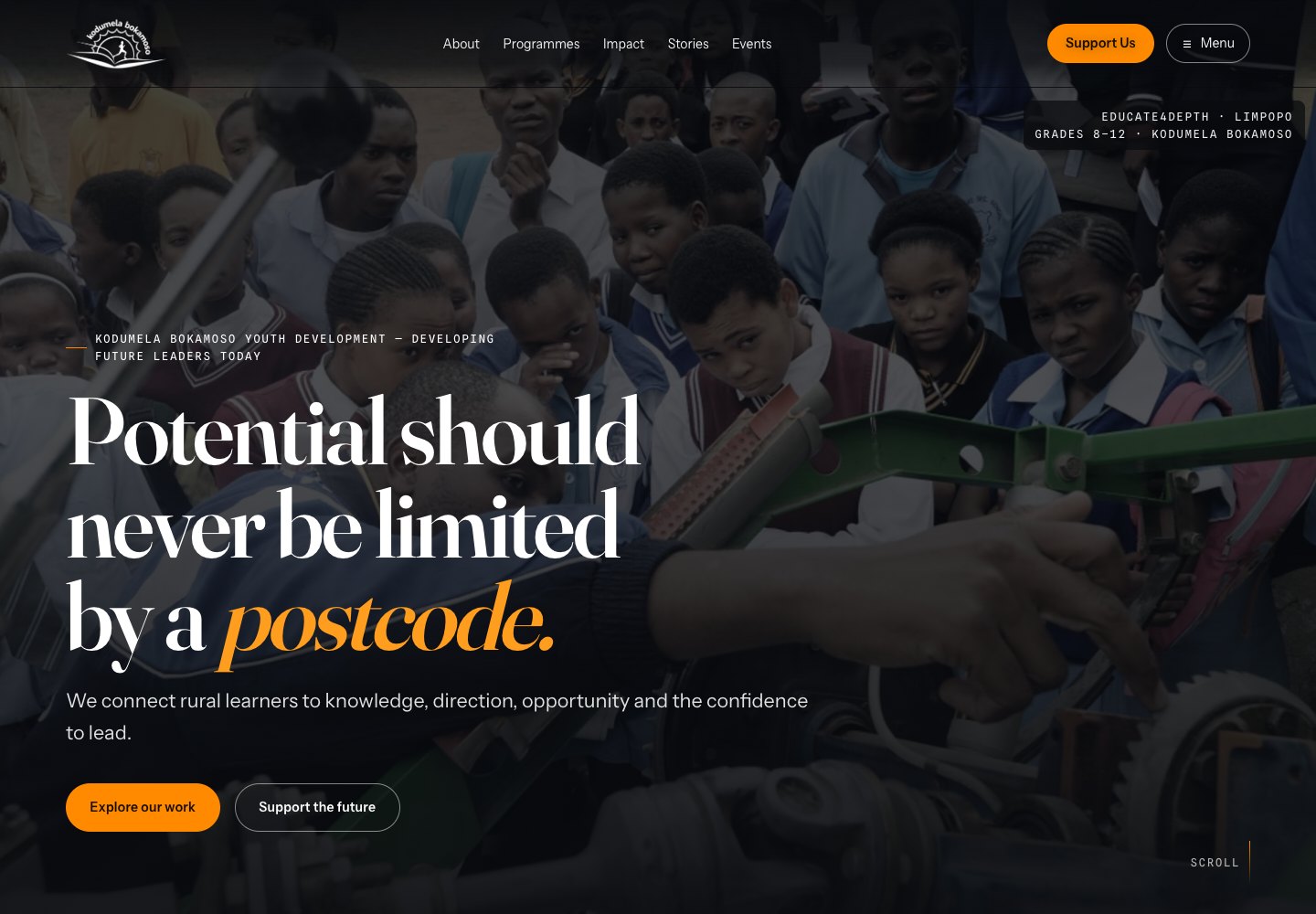
Actual public interface
See the live experience.
System spotlight
The public site is editable—within protected boundaries
Authorised staff can change words, sections, browser titles, and search descriptions on every standing public page; create hidden new pages; publish with the right authority; and add footer links. Design, links, motion, legal clauses, and safeguarding-sensitive surfaces remain controlled rather than becoming a free-form visual builder.
A workflow inside the system
- 01
Coordinate
People, programme and event records organise the work.
- 02
Check
Media review checks consent, rights, credit and descriptions.
- 03
Publish
Authorised staff publish approved content and page updates.
- 04
Protect
Permissions, consent withdrawal and audit history govern access.
The working parts.
The capabilities below describe what was built for this project. Your organisation’s system is scoped around its own people, rules and workflows.
This is not an unrestricted page builder. The OS deliberately gives the team control of public words and publishing while preserving design, links, legal clauses, and safeguarding-sensitive boundaries.
The result
What the system makes possible.
Authorised staff can keep public programme information current while managing the records behind it in permissioned workspaces. Publishing authority, media consent and audit history remain part of the workflow, including controls that withdraw public media when consent changes.
This describes delivered operational capability. It is not a quantified claim about time saved, revenue or customer satisfaction.
See the workflow for yourself.
Request a guided demonstration using a safe preview. Client records, staff accounts and confidential information stay private.
Show us how your organisation works.
We’ll show you what its software could look like. Start with the operational problem, and we’ll help scope a practical path forward.